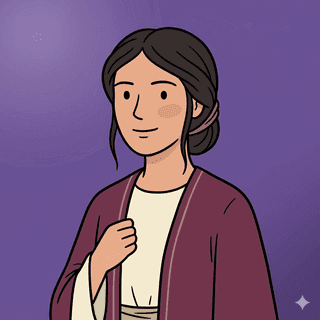
Esther
“If I perish, I perish.”
An orphan girl who saved an entire people with one sentence — 'If I perish, I perish.'
Esther was originally a Jewish orphan named Hadassah. After losing her parents, her cousin Mordecai raised her as his own daughter. One day King Ahasuerus of Persia began searching for a new queen, and beautiful young women from across the empire gathered at the citadel of Susa. She was one of them. On Mordecai's advice, she didn't reveal her background, and in the end she was chosen as queen — an orphan girl now seated in the highest place in Persia.
But the most important moment of her life came after she became queen. Haman, the king's favored official, was enraged that Mordecai wouldn't bow to him, and plotted to have every Jew across the Persian Empire massacred on a single day. Mordecai, dressed in sackcloth and weeping, sent her a message: 'Who knows whether you have not come to the kingdom for such a time as this?' Appearing before the king without being summoned was, by law, punishable by death. She answered: 'If I perish, I perish.'
After a three-day fast, she went before the king. The moment he extended the golden scepter, her life was spared. But she didn't ask for anything right away. She prepared a first banquet, then a second, waiting for exactly the right moment. At the second banquet, she finally spoke: 'O king, if I have found favor in your sight... let my life be granted me for my wish, and my people for my request. For who is he, and where is he, who has dared to do this?' — her finger pointing at Haman. That day, Haman was hanged on the very gallows he had built for Mordecai, and an entire people were saved from annihilation. One woman's 'if I perish, I perish' — a woman who wouldn't take a seat without being summoned — ended up changing the fate of an entire nation.
An orphaned queen. She said, 'If I perish, I perish,' and stood before the king. She realized her place was not chance but calling.
Defining Moments
The events that made this person who they were
An orphan girl becomes queen
Raised by her cousin Mordecai after losing her parents, she is chosen when the king searches for a new queen. She enters the Persian palace without revealing her background.
'If I perish, I perish' — going before the king
When Haman's plot puts the Jewish people at risk of annihilation, Mordecai appeals to her: 'Who knows whether you have not come to the kingdom for such a time as this?' She answers, 'If I perish, I perish.'
Asking the precise question after two banquets
Received into the king's presence with the golden scepter extended, she doesn't ask for anything right away. After preparing two banquets, she asks, at the exact right moment, 'For who is he, and where is he, who has dared to do this?' A whole people saved in that one moment.
Personality
The colors revealed through their story
A depth of quiet patience in the middle of crisis
She doesn't ask right away. She prepares two banquets, waiting for the exact right moment. A resolve paired with patience.
A decision to choose the community over her own safety
If she'd stayed silent in her position as queen, she likely could have survived. But she sets her own safety aside, saying, 'If I perish, I perish.'
Someone who listens deeply to her adoptive father and responds
Mordecai's single line — 'for such a time as this' — shapes her decision. A place where she doesn't decide alone but discerns together with someone else.
★ Strengths
- Decisive resolve at the crucial moment
◐ Shadow
- Seeing yourself as small before the call
💡 On mobile, tap [Share] to send instantly via Messages, Instagram DM, and more.